
NATO ACCS Air Defence Network: Operational Integration Across Europe
Following the Final System Acceptance (FSA) of the Addendum 3 baseline in 2024, the Alliance has begun implementing AI, multi-domain data fusion, and joint interoperability standards that will define the next phase of its Air Command and Control System (ACCS) modernization.


NATO’s Air Command and Control System (ACCS) is transitioning into full operational service across Europe’s air-defence grid. After years of iterative development, the system is being deployed to connect national air-defence networks into a single command structure linking the Combined Air Operations Centres at Uedem and Torrejon with subordinate control nodes across Europe.
This moves from fragmented national control toward a unified, data-driven command architecture.
1. From Acceptance to Integration
The Final System Acceptance of the ACCS Addendum 3 baseline in 2024 concluded the longest software acquisition cycle in NATO’s history.
Implementation has since moved to national command centres — first in France, where the system now anchors the Centre national des opérations aériennes at Mont-Verdun. Germany and Italy follow in 2025–26, synchronising their national air-defence networks with NATO’s operational backbone.
The Addendum 3 architecture introduces a redesigned human–machine interface, improved multi-domain data fusion, and hardened cybersecurity. Its purpose is not only modernisation but interoperability: ensuring that every radar track and engagement order can circulate through a single digital chain of command.
2. Automation and Artificial Intelligence
Under the supervision of the NATO NCIA, the next phase of ACCS migration includes the introduction of AI-enabled decision-support tools. These are intended to assist track correlation, sensor fusion and engagement sequencing — tasks previously done manually under time pressure.
In April 2025, NCIA announced the acquisition of the Palantir Maven Smart System NATO (MSS NATO) AI-enabled war-fighting system. Together with NATO’s AI Strategy (2021) and the NCIA Technology Strategy 2030, this marks the formal transition from experimental AI use to structured integration in Alliance C2.
While full operational deployment within the ACCS backbone is still forthcoming, NCIA and ACT are conducting validation trials to assess algorithmic reliability, transparency, and trust under NATO’s Responsible AI principles. A 2025 peer-reviewed study by the University of Copenhagen’s Centre for Military Studies (Trabucco & Larsen) finds that AI-driven decision-support systems are already transforming command processes across Western militaries by fusing multi-source sensor and OSINT data into predictive targeting and planning aids—while raising new governance and legal standards.
Similar allied experiments, such as the U.S. Air Force’s “DASH 2” AI battle-management exercise and France’s CENTAURE project, show measurable gains in solution throughput and commander situational awareness. The conceptual aim across these efforts is clear: not autonomy, but acceleration—enabling human commanders to operate at a tempo approaching machine speed.
Within ACCS, Addendum 3 already provides the modular interfaces required to host adaptive algorithms that could draw from live radar, ISR, and satellite feeds—forming a continuous decision-support chain from sensor to effector. Alliance-wide rollout of such capabilities is planned for 2025–27, subject to interoperability testing, data-governance compliance, and exploration of quantum-resilient communications.
3. Integration with ESSI and NATINAMDS
The European Sky Shield Initiative (ESSI), led by Germany and now joined by 20 states, depends on ACCS as its operational interface. Together with NATO's Integrated Air and Missile Defence System (NATINAMDS), the network establishes a layered command lattice: at the strategic level, the Combined Air Operations Centres at Uedem and Torrejón maintain the common air picture; at the operational level, national C2 nodes such as Mont-Verdun and Erndtebrück integrate domestic networks into the Alliance backbone; and at the tactical level, sensor and launcher linkages connect effectors like Patriot, IRIS-T SLM, and NASAMS directly into the command chain.
Where national networks once operated in parallel, ACCS now mediates real-time coordination between ground-based interceptors, airborne platforms, and space-based early-warning feeds.
4. Eastern-Flank Implementation
The deployment of NASAMS to Poland in late 2024 — covering the Rzeszów logistics hub — demonstrated how national assets can be folded into the NATO command grid.
Data from Norwegian F-35 patrols and U.S. Aegis Ashore radars at Redzikowo now feed into the same command environment, enabling shared situational awareness and cross-system cueing.
This integration transforms air defence from a static shield into a responsive, multi-domain web — capable of coordinated reaction within seconds rather than minutes.
5. 2025–27: Toward Multi-Domain Command
Planned capability increments for 2025–27 include:
- Distributed AI Command Nodes across all CAOCs
- Live-Virtual-Constructive training loops linking simulation and live data
- Space and Cyber Integration for continuous domain awareness
- Quantum-resilient communications for long-term cryptographic security
These developments point toward a single operational reality: NATO’s air-defence command architecture is evolving into a persistent, adaptive network, not a static system release.
6. Strategic Assessment
The consolidation of ACCS, ESSI, and NATINAMDS redefines Europe’s strategic posture.
For the first time, the continent’s air and missile defences operate within a shared digital environment governed by Alliance standards rather than national exceptions.
The industrial implications are equally significant. European contractors are aligning on interoperable radar, command, and data-link standards — a quiet but decisive step toward technological sovereignty in collective defence.
In strategic terms, ACCS functions as NATO’s operational nervous system: a real-time decision fabric connecting sensors, shooters, and command authorities.
Its maturation in 2025–26 will determine whether Europe can match the speed and coordination demanded by high-intensity warfare.
Related Reading
 Großwald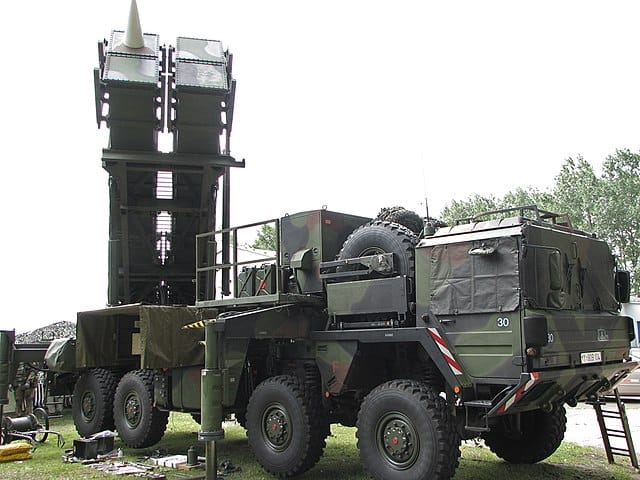
 Großwald
 Großwald Systems Desk
About Großwald
Großwald is an independent defence intelligence platform delivering curated coverage of military systems, strategy, and geopolitical risk. Our editorial focus includes NATO, Central and Eastern Europe, and the evolving architecture of European defence integration.
We serve decision-makers, military professionals, and researchers with high-signal, contextualized reporting—free of government affiliation.


